How Autonomous AI Agents Are Running Ad Campaigns End-to-End
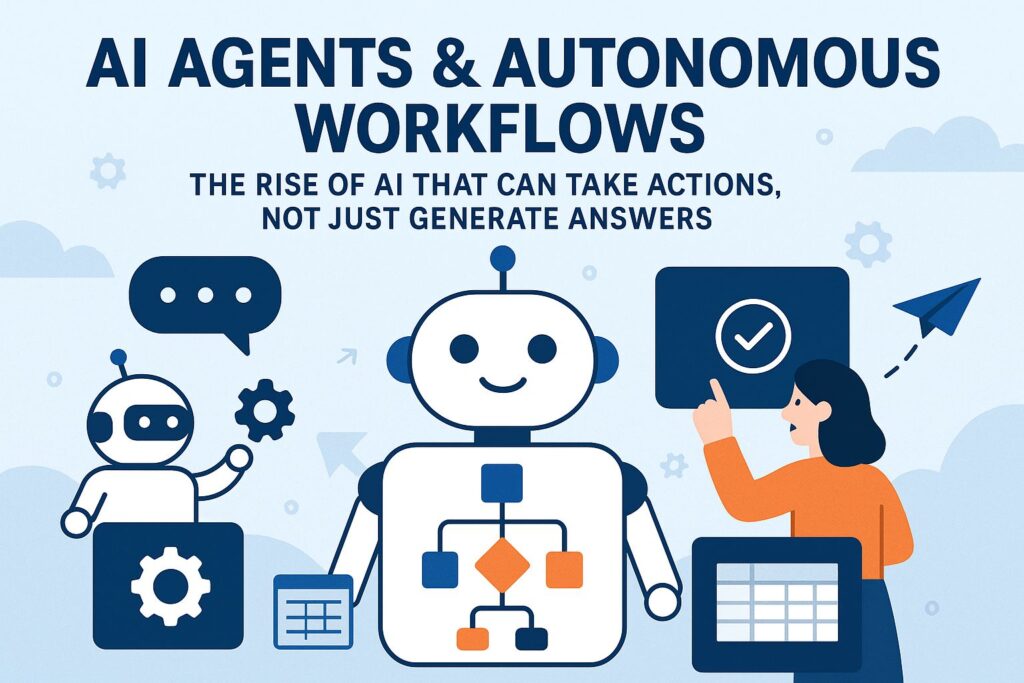
The advertising ecosystem is undergoing a fundamental shift. As consumer journeys become increasingly complex and data volumes continue to grow, traditional campaign management methods like manual optimization, rule-based automation, and fragmented decision-making – are reaching their limits. In response, advertisers are turning to autonomous AI agents that can manage campaigns end-to-end with speed, precision, and scale.
Unlike conventional automation tools that operate within predefined rules, autonomous AI agents are designed to observe, learn, decide, and act independently. They bring together data intelligence, predictive modeling, and continuous optimization to manage the full lifecycle of an advertising campaign – reducing human intervention while improving performance outcomes.
From Assisted Automation to Autonomous Intelligence
Early forms of AI in advertising focused primarily on assistance. Algorithms helped optimize bids, recommend creatives, or identify high-performing segments, but decision-making largely remained human-led. Autonomous AI agents represent the next stage of evolution.
These systems are capable of understanding campaign objectives, evaluating real-time signals, and adjusting strategies dynamically without requiring constant manual input. By continuously learning from outcomes and feedback loops, they evolve alongside changing user behavior, market conditions, and platform dynamics.
At the core of this shift is the ability to move from isolated optimizations to holistic campaign intelligence.
How Autonomous AI Agents Manage the Campaign Lifecycle
Autonomous AI agents operate across every stage of a campaign, creating a unified and adaptive advertising process.
Planning and Strategy Formation
Campaigns begin with clear objectives – reach, engagement, conversions, or ROI. Autonomous agents translate these goals into actionable strategies by analyzing historical performance, audience insights, and market trends. This allows for intelligent budget allocation, channel selection, and timeline planning, grounded in data rather than assumptions.
Audience Discovery and Targeting
Using first- and zero-party data enriched through identity graphs, AI agents build accurate audience profiles and identify high-value segments. Lookalike modeling and cohort generation are continuously refined as new behavioral signals emerge, ensuring targeting remains relevant across channels and devices.
Creative and Channel Optimization
Once campaigns go live, autonomous agents monitor performance across formats and platforms in real time. They dynamically adjust creative combinations, placements, and frequency to maintain consistency while maximizing engagement. This ensures messaging remains aligned throughout the omni-channel journey.
Real-Time Optimization and Learning
One of the most powerful advantages of autonomous AI agents is their ability to learn continuously. Performance data feeds back into the system, enabling rapid experimentation, adaptive bidding, and budget reallocation. Underperforming strategies are corrected instantly, while successful patterns are scaled without delay.
Measurement and Outcome Prediction
Beyond reporting, autonomous agents predict future performance using advanced modeling techniques. This enables proactive decision-making, helping advertisers anticipate shifts in demand, audience behavior, or campaign fatigue before they impact results.
The Role of Data and Identity in Autonomy
Autonomous decision-making is only as strong as the data that supports it. High-quality first- and zero-party data provide the foundation for accurate modeling, while identity resolution ensures consistency across touchpoints. By unifying user interactions into a single, privacy-compliant view, AI agents gain a deeper understanding of intent and behavior.
This identity-driven approach not only improves targeting accuracy but also enables responsible data usage in an increasingly privacy-conscious environment.
Where Human Oversight Still Matters
Despite their autonomy, AI agents are not designed to replace human expertise. Strategic oversight remains essential – particularly when defining objectives, evaluating long-term brand impact, and ensuring alignment with business goals. Human intervention provides contextual judgment and ethical governance, while AI handles execution at scale.
The most effective advertising ecosystems combine human strategy with machine intelligence, allowing each to operate where it performs best.
What This Means for Advertisers
Autonomous AI agents are redefining efficiency in digital advertising. By managing campaigns end-to-end, they reduce operational complexity, accelerate decision-making, and deliver more consistent performance across channels. Advertisers benefit from greater transparency, improved ROI, and the ability to scale without sacrificing control.
As the advertising landscape continues to evolve, autonomy will no longer be a differentiator – it will be a necessity.
Looking Ahead
The future of advertising lies in intelligent ecosystems that adapt in real time. Autonomous AI agents, powered by strong identity frameworks and privacy-first data strategies, are setting the standard for how campaigns are planned, executed, and optimized.
With Cubera’s AI-driven AdTech ecosystem, brands can move beyond fragmented automation and toward truly autonomous advertising – where data, intelligence, and performance work in perfect synchronization.