Why Millisecond Latency Is the New Battleground in Real-Time Bidding

In modern programmatic advertising, winning an auction is no longer just about bid value or audience relevance. It is increasingly about speed. In real-time bidding (RTB), where decisions are made in fractions of a second, millisecond latency has become a decisive competitive factor – one that directly impacts win rates, performance, and revenue.
As advertising systems grow more intelligent and data-rich, the ability to act faster than competitors is redefining success in programmatic auctions.
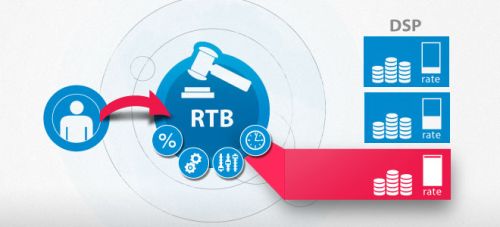
Understanding Latency in Real-Time Bidding
Latency refers to the time it takes for a system to process a bid request, evaluate signals, make a decision, and respond during an auction. In RTB environments, this entire process typically occurs within 100 milliseconds or less.
Even minor delays – measured in single-digit milliseconds – can determine whether a bid is accepted, ignored, or timed out. In highly competitive auctions, slower systems simply lose the opportunity to participate, regardless of bid quality.
Why Speed Now Determines Auction Outcomes
Programmatic ecosystems operate at a massive scale, with millions of auctions occurring every second. As more advertisers rely on AI-driven bidding strategies, competition has intensified – not just on price, but on responsiveness.
Faster systems are able to:
- Evaluate more bid opportunities within the same time window
- Submit bids before auction deadlines expire
- React to real-time signals with greater accuracy
In contrast, higher latency limits participation, reduces win rates, and increases inefficiencies – making speed a direct driver of performance.
The Role of AI in Low-Latency Decision-Making
AI-powered bidding engines must balance intelligence with execution speed. While advanced models improve prediction accuracy, they also introduce computational complexity. The challenge lies in designing systems that can generate high-quality decisions without sacrificing responsiveness.
Optimized AI architectures, efficient data pipelines, and real-time inference models allow platforms to process signals rapidly while maintaining predictive strength. When AI decisions are delivered within strict latency thresholds, advertisers gain both precision and speed – an increasingly rare combination.
Infrastructure as a Competitive Advantage
Latency is not only a software issue – it is deeply tied to infrastructure. Proximity to exchanges, optimized cloud architectures, and efficient data routing all play critical roles in reducing response times.
Modern AdTech platforms invest heavily in infrastructure design to minimize delays across the bidding lifecycle. This includes reducing network hops, optimizing storage access, and ensuring scalable systems that perform consistently under peak demand.
In this environment, infrastructure is no longer a backend concern – it is a strategic differentiator.
Identity and Latency in Privacy-First Auctions
As identity resolution shifts toward first- and zero-party data, additional processing layers are introduced into RTB workflows. Resolving identity, validating consent, and activating cohorts must all occur without increasing response times.
Well-designed identity graphs enable rapid lookups and decision-making without relying on slow or fragmented data sources. This ensures that privacy-first bidding does not come at the cost of speed – a critical requirement in modern auctions.
Why Milliseconds Matter More Than Ever
In today’s programmatic landscape, advertisers are not competing in seconds or even tenths of a second. They are competing in milliseconds. Faster response times translate directly into:
- Higher auction participation
- Improved win rates
- Better inventory access
- Stronger campaign performance
As AI, identity, and scale converge, latency has become the invisible battleground shaping advertising outcomes.
The Performance Edge
Millisecond latency is no longer a technical detail – it is a performance lever. Advertisers that operate on faster, smarter systems gain access to better opportunities, more consistent results, and greater efficiency at scale.
With Cubera’s AI-led AdTech ecosystem, low-latency infrastructure, identity-driven intelligence, and real-time optimization work in unison – ensuring advertisers compete and win where it matters most: in the milliseconds that decide every auction.